
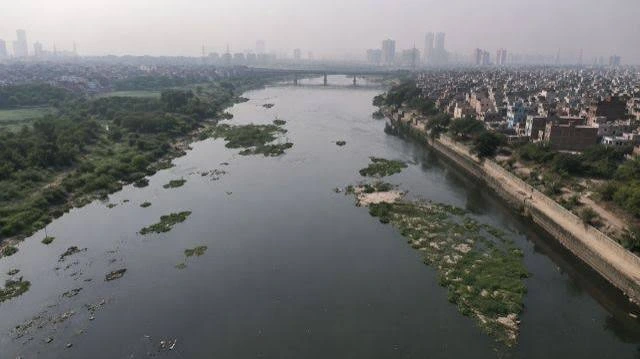
Seeking to tackle the single largest source of pollution entering Yamuna river, the Delhi Jal Board (DJB) on Wednesday approved sewerage and wastewater treatment projects worth around Rs 4,500 crore, including setting up of 15 decentralised sewage treatment plants (DSTPs), covering 1,000 km of sewer lines and upgrading existing treatment infrastructure.
“These projects are expected to benefit around 20 lakh residents,” said Water Minister Parvesh Sahib Singh, adding that the work is set to be completed within 21 months.
In a statement, the government said the new plants will cater largely to areas where sewer infrastructure remains inadequate.
While the city has steadily expanded its sewage treatment capacity over the years, large volumes of wastewater still enter drains – either because many colonies remain unconnected to the sewer network or sewage has to travel a long distance before reaching treatment plants.
Delhi currently has 22 drains discharging wastewater into Yamuna, with Najafgarh and Shahdara drains alone contributing around 80% of the total pollution load observed in the Capital.
Singh said that while 13 DSTPs had been approved earlier, the DJB has now awarded 15 additional DSTPs with a combined treatment capacity of 103.5 MGD at an investment of nearly Rs 2,000 crore.
Officials said the together, the DSTPs will add 227 million gallons per day (MGD) of treatment capacity, taking Delhi’s overall sewage treatment capacity from 814 MGD to 1,041 MGD – exceeding the current sewage load of around 1,000 MGD generated by the city.