
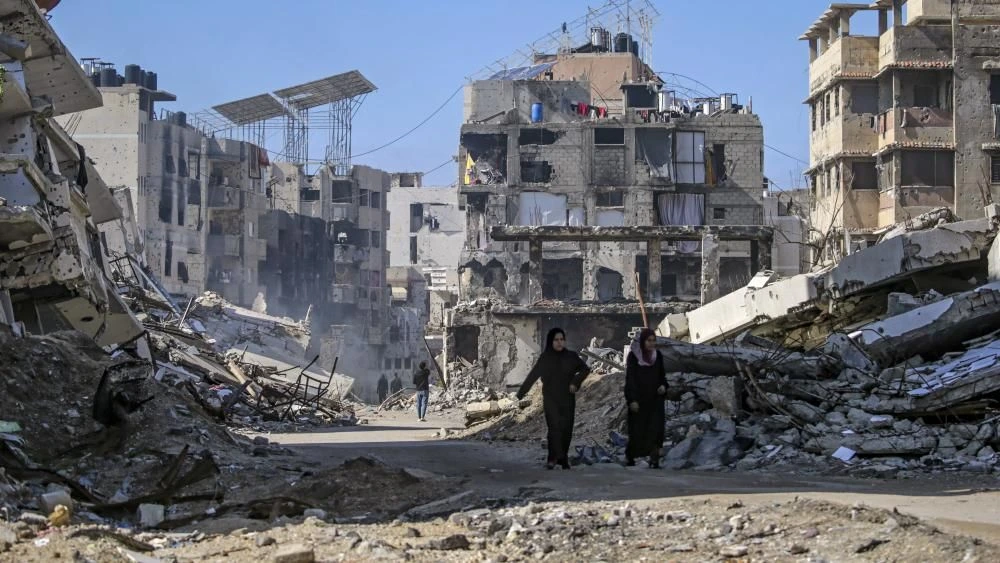
Egypt, a key mediator in efforts to extend the ceasefire, strongly criticised Israel’s decision. Egyptian foreign minister Badr Abdelatty said at a press conference that aid must not be used “as a weapon for collective punishment or starvation.”
Saudi Arabia’s foreign ministry also condemned the move, calling it a “blackmailing and collective punishment tool.”
Hamas denounced the aid cut-off as “blackmail” and “a war crime,” while Israeli foreign minister Gideon Sa’ar pointed to the frail condition of Israeli hostages recently released from Gaza, contrasting it with the crowds surrounding them.
“The terrorists and the crowd looked perfectly fine. The only ones that looked like they were starving were our hostages,” Sa’ar said at a press conference with his Croatian counterpart.
A huge, huge, huge number of trucks” entered the Gaza Strip over the past six weeks, he added.
Disputes over Hamas’ long-term status have delayed progress on a proposed Phase 2, which includes Israel’s full military withdrawal from Gaza and the recovery of remaining hostages.
Earlier, Prime Minister Benjamin Netanyahu’s office warned that “if Hamas keeps up its recalcitrance” regarding the ceasefire, “there will be further consequences.”
In a last-minute proposal put forward by White House envoy Steve Witkoff, Israel expressed willingness to enter a new truce covering the Muslim holy month of Ramadan and the Jewish festival of Passover.
Under the plan, about half of the 59 hostages would be released immediately, while the rest would be freed later as part of a separate agreement on an open-ended suspension of hostilities.